
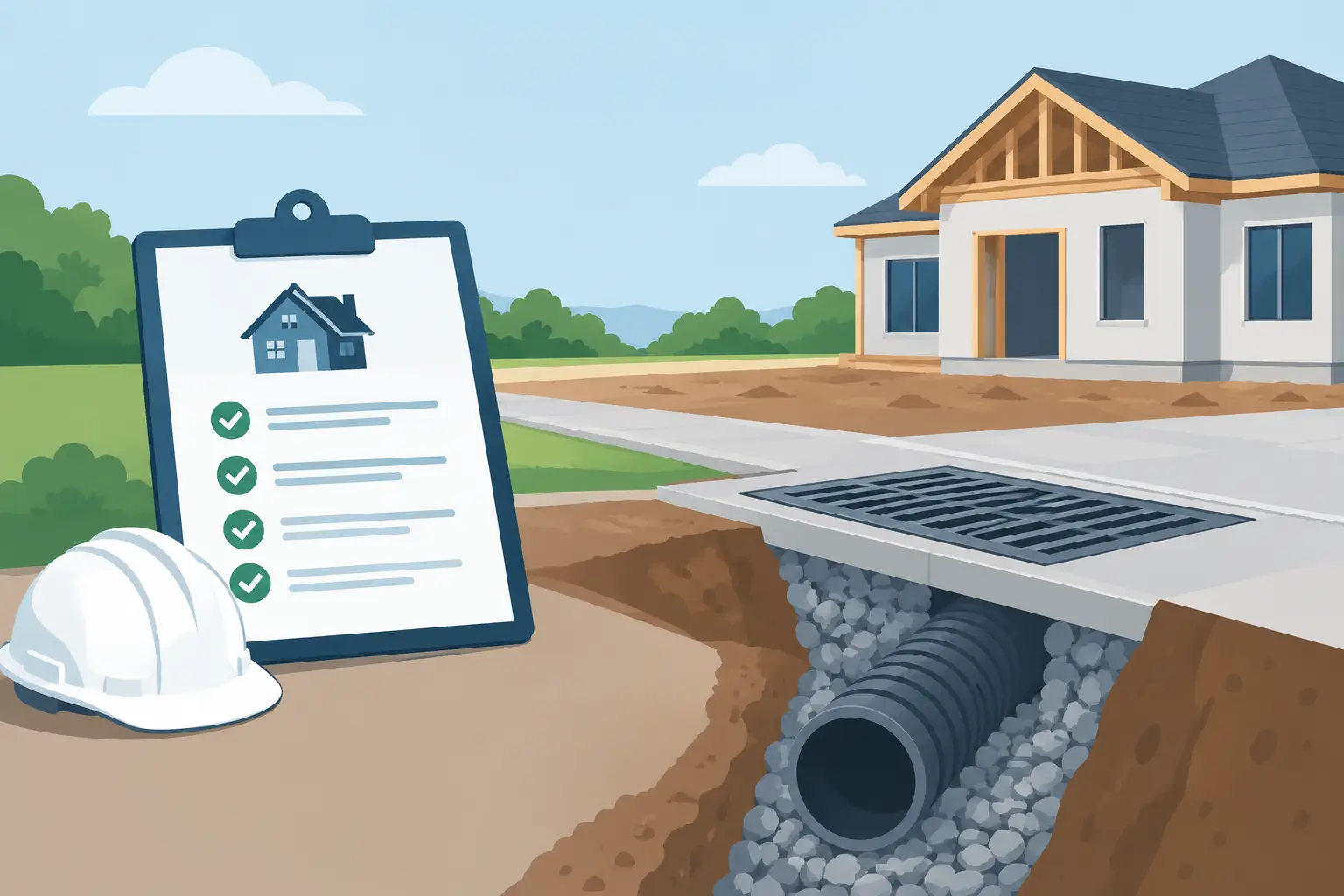
A blocked gully, a wrongly connected wash-down area or an unrecorded spill can turn ordinary rainfall into a permit compliance issue. For waste, remediation and industrial operators, drainage is not simply a civil engineering concern. It is a controlled pathway that can carry contaminated water, silt, oils, leachate or firewater beyond the operational area.
This site drainage compliance guide sets out the practical controls UK permit holders should have in place to understand their drainage, prevent pollution and demonstrate control during an Environment Agency inspection. The precise requirements will depend on the activity, permit conditions, site layout and discharge arrangements, but the underlying principle is consistent: clean water should remain clean, and potentially contaminated water must be contained, managed and discharged only through authorised routes.
Start with the permit and the site reality
Drainage arrangements must be reviewed against the environmental permit, approved operating techniques, environmental management system and any planning or trade effluent conditions. A drainage drawing prepared years ago is useful only if it reflects the site as it operates now.
This is particularly relevant where a site has expanded, changed waste types, moved stockpiles, installed additional wash-down facilities or altered traffic routes. Small operational changes can have a significant effect on surface-water quality and flow paths. A new bay may drain towards an existing gully; a temporary bund may direct water into a yard drain; damaged hardstanding may allow contaminated runoff to enter ground.
The permit may include specific requirements for drainage, pollution prevention, surface-water monitoring, containment or discharge. It may also require the operator to implement an Environmental Management System with procedures for inspections, maintenance, incidents and corrective action. Conditions should not be treated as separate documents. They need to work together in day-to-day site control.
Where water is discharged to foul sewer, a separate trade effluent consent or agreement may apply. Where discharges reach controlled waters or ground, the regulatory position is likely to be more restrictive. Do not assume that a connection shown on a plan is authorised simply because it has existed for some time.
Separate clean and contaminated drainage
The most effective control is physical separation. Roof water and clean surface water should be kept separate from drainage serving waste handling, vehicle movements, fuel storage, quarantine areas, loading bays and wash-down zones.
On many permitted sites, all hardstanding is treated as potentially contaminated by default. That approach can be appropriate where waste is handled outdoors or lorries regularly track material across the yard. However, it can also create unnecessary volumes of contaminated water that need treatment or containment. The correct approach depends on the activity undertaken in each area and the credible pollutants present.
A clear drainage strategy normally identifies three categories:
- clean water, such as uncontaminated roof runoff;
- potentially contaminated surface water from operational areas; and
- foul or process water, including vehicle wash water, leachate and water from cleaning activities.
Each category needs a defined destination. This may be a surface-water system, foul sewer, contained storage, treatment plant or authorised discharge point. The route must be traceable from source to outfall, including gullies, channels, interceptors, sumps, manholes, penstocks and isolation valves.
Misconnections are a recurring risk. A wash-down point connected to surface water, or a yard drain that bypasses an interceptor, may remain unnoticed until an inspection, sample result or pollution incident exposes the problem. Dye testing and CCTV surveys can be appropriate where drawings are incomplete or there is doubt about the system’s condition.
Produce a drainage plan people can use
A compliant drainage plan should be a working operational document, not a drawing retained in a folder for permit application purposes. It should be legible at site level and available to managers, operatives and emergency responders.
The plan should show the direction of flow, drainage types, manholes and outfalls, as well as pollution-control infrastructure such as interceptors, settlement chambers, shut-off valves and bunded areas. It should also identify higher-risk locations including fuel tanks, waste storage areas, loading zones, workshops, battery storage, oil stores and firewater containment points.
Plans should be controlled documents with a revision date. If drainage is altered, update the plan promptly and communicate the change to affected staff. An accurate plan is also essential for incident response. During heavy rainfall or a spill, the person attending the site needs to know which valve to close and where contaminated water is likely to travel.
Inspect and maintain the system
Drainage controls fail gradually as well as suddenly. Silt accumulates in gullies, interceptor alarms stop working, valve keys go missing and drains become damaged by vehicle movements. A visual check after a serious incident is not an adequate maintenance regime.
Inspection frequency should be risk-based. High-traffic waste yards, sites with outdoor waste storage and areas exposed to oils, fines or wash-down water generally need more frequent checks than clean roof drainage. Inspections should assess whether gullies are blocked, covers are damaged, channels are free-flowing, interceptors are operating, and valves remain accessible and clearly identified.
Interceptors require particular attention. They are not a solution for every contaminant and do not remove the need for good housekeeping. They can help manage oil-contaminated runoff where appropriately specified, installed and maintained, but they may be unsuitable for heavily contaminated water, emulsions, solvents or significant sediment loads. Their maintenance records should include dates, findings, waste removal details and any defects identified.
Keep records that demonstrate the control has been implemented, not just written. Inspection sheets, service reports, waste transfer documentation for interceptor contents, photographs of repairs and completed corrective actions can all provide useful evidence during an audit or regulatory visit.
Control contamination before it reaches a drain
The lowest-risk drainage strategy is to reduce contamination at source. Good housekeeping, clearly designated storage areas and prompt removal of loose material all reduce the burden on drainage infrastructure.
Waste should be stored on suitable surfaces and within defined areas. Where materials can generate contaminated runoff, the need for cover, containment or indoor storage should be assessed. Fine materials, soils, residues and mixed wastes can be mobilised quickly during rainfall, particularly where stockpiles are placed close to gullies or site boundaries.
Vehicle and plant management also matters. Drips and leaks should be dealt with immediately, with spill kits positioned where they can be reached without delay. Wheel washes and vehicle wash-down areas must be designed around the actual volume and type of water generated. Water from washing contaminated plant is unlikely to be suitable for uncontrolled surface-water drainage.
In dry weather, contaminated dust and debris can build up across a yard. The first heavy rainfall then carries it directly into the drainage network. Routine sweeping is therefore a pollution-prevention measure, not simply a presentation standard.
Prepare for spills, firewater and severe weather
Drainage isolation forms a central part of a site’s emergency arrangements. Staff should know the location of shut-off valves, how to operate them safely and who has authority to make the decision. If the system relies on a valve key, it must be available at all times, including outside normal operating hours.
Firewater requires separate consideration. Water used to tackle a fire can mobilise pollutants from waste, fuel, ash, chemicals and damaged containers. A Fire Prevention Plan should address likely firewater volumes, containment capacity, drainage isolation and the action required before emergency services arrive where it is safe to do so. The plan must reflect the actual drainage layout and be tested with site personnel.
Severe rainfall is another foreseeable event. Check that containment areas have sufficient freeboard, drainage channels are clear before periods of poor weather, and emergency pumping or tankering arrangements are realistic. A plan that relies on a contractor arriving immediately may not be adequate during a widespread weather event.
Make drainage part of routine compliance management
The strongest arrangements are built into routine site management rather than handled as a specialist task once a year. Include drainage in induction training, toolbox talks, weekly inspections and management review. Operatives are often the first people to notice unusual odours, discoloured water, overflowing gullies or damaged covers, so they need a straightforward route for reporting concerns.
When a defect or incident occurs, record the cause as well as the immediate repair. Repeated blocked drains may indicate unsuitable sweeping, poor stockpile control or insufficient silt management. Recurrent contamination around a bay may show that the drainage design no longer matches operations. Corrective action should address the underlying issue, not only restore flow.
For complex sites, independent review can be valuable before an application, variation, inspection or operational change. EWS Consultancy Services Ltd supports operators with permit-led documentation, Environmental Management Systems, Fire Prevention Plans and practical compliance arrangements that can be implemented on site.
A drainage system rarely attracts attention when it is working properly. That is exactly the point. Clear plans, disciplined maintenance and trained staff allow operators to manage water with the same control they apply to waste acceptance, storage and dispatch – before a preventable problem reaches the regulator or the environment.