
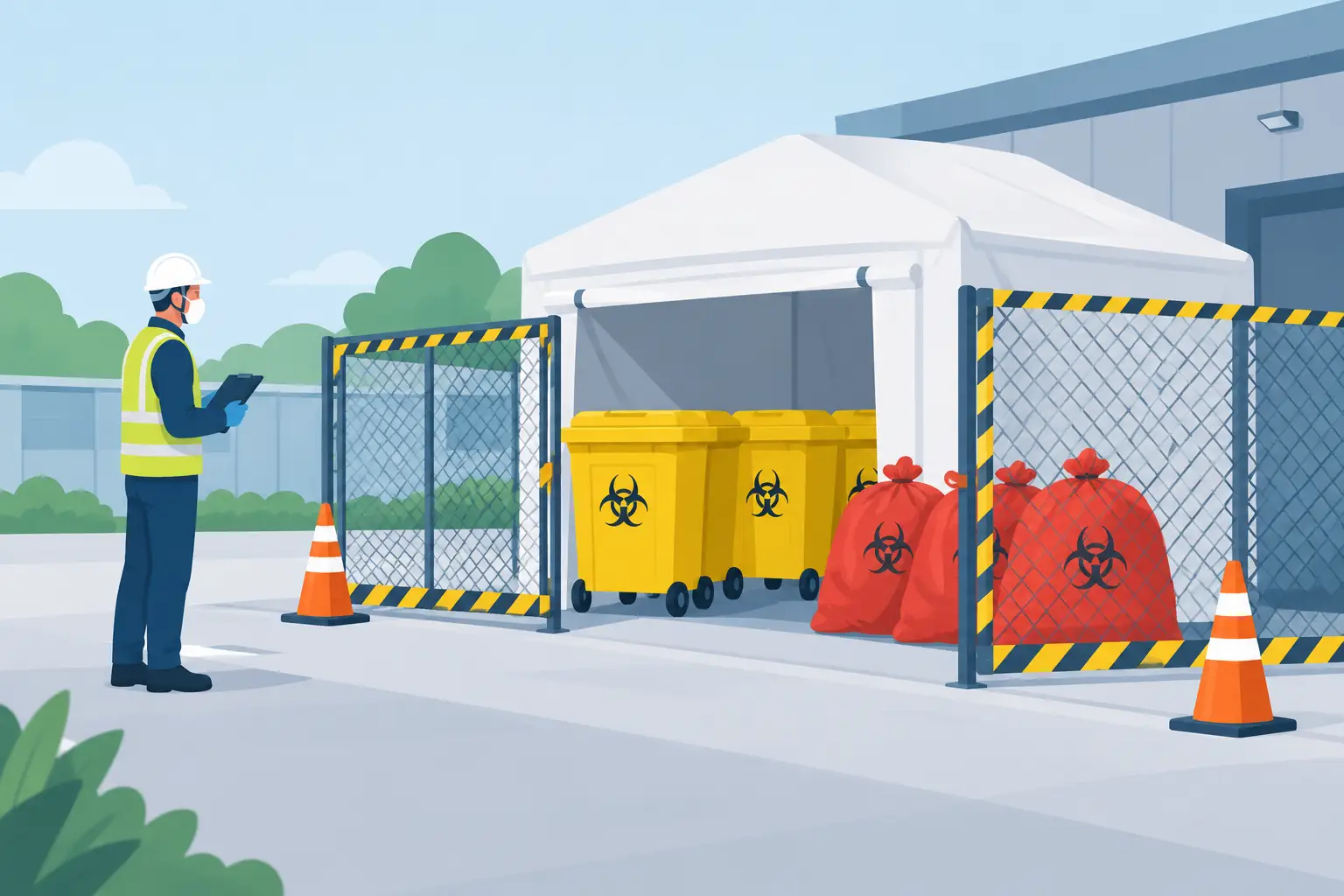
A quarantine area is not simply an extra bay for waste that cannot be processed immediately. It is a controlled part of the site where uncertainty, non-conformity and potential environmental risk must be contained. To manage waste quarantine areas effectively, operators need defined decisions, physical controls and records that show what happened from the point an issue is identified through to its resolution.
For permitted waste sites, poor quarantine arrangements can quickly become a wider compliance concern. Unidentified waste may be mixed with accepted loads, stored beyond the site’s authorised limits, exposed to weather, or allowed to create a fire, odour or pollution risk. A well-managed area gives site teams time to investigate without losing control of the waste or the site’s permit obligations.
Why waste enters quarantine
Waste should be placed in quarantine when it cannot be confidently accepted, stored or treated under the site’s normal operating procedures. This may be identified at the weighbridge, during load inspection, while unloading, or later in the processing line.
Common examples include a load that does not match its transfer note or waste description, material containing suspected hazardous components, incorrectly coded waste, excessive contamination, or waste arriving from an unapproved source. Quarantine may also be necessary after a damaged container, a spill, a fire-related incident or a complaint that requires a particular batch to be traced.
The key point is that quarantine is for controlled investigation, not a way to defer a difficult decision. If a waste stream is repeatedly quarantined, the acceptance procedure, customer information or operational controls need review.
Start with permit and acceptance criteria
The correct approach depends on the Environmental Permit, the site’s waste acceptance procedures, authorised waste types and any relevant limits on storage, treatment or emissions. A quarantine procedure cannot override those controls. It should support them.
Before a load is accepted, site staff should be able to confirm the producer or source, waste description, European Waste Catalogue code where applicable, carrier details, documentation and whether the material is permitted at the facility. Pre-acceptance information is particularly valuable for variable or higher-risk waste streams, including soils, construction and demolition waste, contaminated materials and mixed loads.
Where the incoming material does not meet the agreed criteria, the preferred outcome may be to reject it before unloading. This avoids introducing unsuitable material to the site. However, there will be occasions when unloading into a designated quarantine area is the safest practical option, particularly where the load cannot remain on a vehicle or where an issue becomes apparent after tipping.
Site procedures should make this distinction clear. Teams need to know who can authorise quarantine, who can authorise rejection or onward transfer, and when management or competent environmental advice is required.
How to manage waste quarantine areas on site
A quarantine area should be clearly identified on the site plan and physically distinguishable from accepted waste storage and processing areas. Signage should state its purpose and restrict access to authorised personnel. In practice, this may be a marked bay, covered bunker, lockable container or segregated hardstanding area. The right arrangement depends on the type, quantity and condition of waste likely to be held.
The area must be suitable for containment. Impermeable surfacing, suitable drainage arrangements and protection from rainfall may be necessary where there is a risk of contaminated runoff or leachate. For dusty, odorous, lightweight or potentially hazardous materials, additional containment may be required. Waste should never be allowed to migrate into surface water drainage, neighbouring land or other waste stockpiles.
Segregation is equally important. Quarantined material should not be mixed with accepted waste merely because it appears similar. Once mixed, traceability is lost and the issue may affect a much larger stockpile. Each quarantined load or batch should remain identifiable, with a durable label or marker linked to the relevant record.
Capacity must be realistic. A small, poorly controlled area that routinely overflows into operational space is not functioning as quarantine. Consider peak delivery periods, likely rejected load sizes, turnaround times for onward disposal and the consequences of a prolonged incident. The Fire Prevention Plan should also reflect the location, storage arrangements and potential combustible load within the area.
Create a clear decision process
A practical quarantine procedure should be straightforward enough for weighbridge and site staff to follow under pressure. It should set out what triggers quarantine, immediate containment actions, recording requirements and escalation routes.
When a non-conforming load is identified, staff should first make the area safe. This may involve stopping unloading, keeping people away from the material, preventing access by plant, containing any spill and notifying the duty manager. Where there is a potential fire, chemical, asbestos or hazardous waste issue, the response must follow the site’s emergency arrangements and competent advice should be obtained promptly.
The waste should then be assessed against available information. This may involve reviewing transfer documentation, checking pre-acceptance records, contacting the customer, inspecting the load further or arranging sampling where appropriate. Site teams should avoid making assumptions based on appearance alone. Materials such as contaminated soils, insulated panels, batteries, gas cylinders and asbestos-containing materials can present risks that are not always immediately visible.
The final decision should be documented. Depending on the circumstances, the material may be returned to the supplier, transferred to an appropriately permitted facility, accepted under a revised and properly authorised route, or managed as part of an incident response. Any treatment, repackaging or movement must remain within the site’s permit and documented operating procedures.
Keep records that demonstrate control
Good records are essential because they demonstrate that the quarantine area is actively managed rather than used as unaccounted storage. The record should link the waste to the date and time of arrival, vehicle registration, source, waste description, documentation reference, estimated or recorded quantity, reason for quarantine and its precise location.
It should also capture the outcome, including who made the decision, any photographs or inspection notes, the date the waste left quarantine and the destination or disposal documentation. If the load was accepted after investigation, record why this was appropriate and any conditions applied.
A simple quarantine log can work well when it is consistently maintained and checked. Digital systems may provide stronger traceability where volumes are high or multiple sites are involved. The format matters less than the quality of the information and whether it can be produced quickly during an inspection, audit or incident investigation.
Inspect routinely and prevent backlog
Quarantine requires active oversight. Daily checks are often appropriate where waste is held outdoors, where the area is used regularly, or where the material presents heightened environmental or fire risk. Inspections should check that labels remain legible, waste is segregated, containers are sound, drainage is clear, access is controlled and no material has been added without a corresponding record.
The inspection should also focus on time. Waste left in quarantine for too long can indicate an unresolved compliance issue, create capacity pressure and increase the risk of deterioration. Set internal review timescales that reflect the waste type and risk. A suspected hazardous load or material causing pollution risk requires a far faster response than a straightforward documentation discrepancy.
Recurring issues should be analysed rather than dealt with in isolation. If a particular customer, carrier, waste stream or shift repeatedly generates quarantined loads, investigate the cause. It may be poor customer segregation, unclear acceptance criteria, inadequate staff training or a commercial arrangement that no longer reflects the material arriving on site.
Train people for the decisions they must make
The most detailed procedure will not protect the site if staff cannot recognise an issue or are unsure how to respond. Training should cover waste acceptance checks, visual inspection, prohibited and restricted materials, use of the quarantine area, incident reporting and escalation. It should be tailored to the roles of weighbridge operators, yard operatives, plant drivers, supervisors and managers.
Refresher training is particularly useful after permit changes, incidents, new waste streams or repeated non-conformances. Toolbox talks can reinforce specific risks, but they should not replace documented competence training where staff are responsible for critical acceptance decisions.
A controlled quarantine area protects more than a single load. It gives the operator evidence that site personnel can identify uncertainty, contain risk and make decisions within the permit framework. For businesses reviewing their arrangements, practical procedures, site plans, fire controls and staff training should work together so that quarantine remains a short-term control, not a permanent storage solution.