
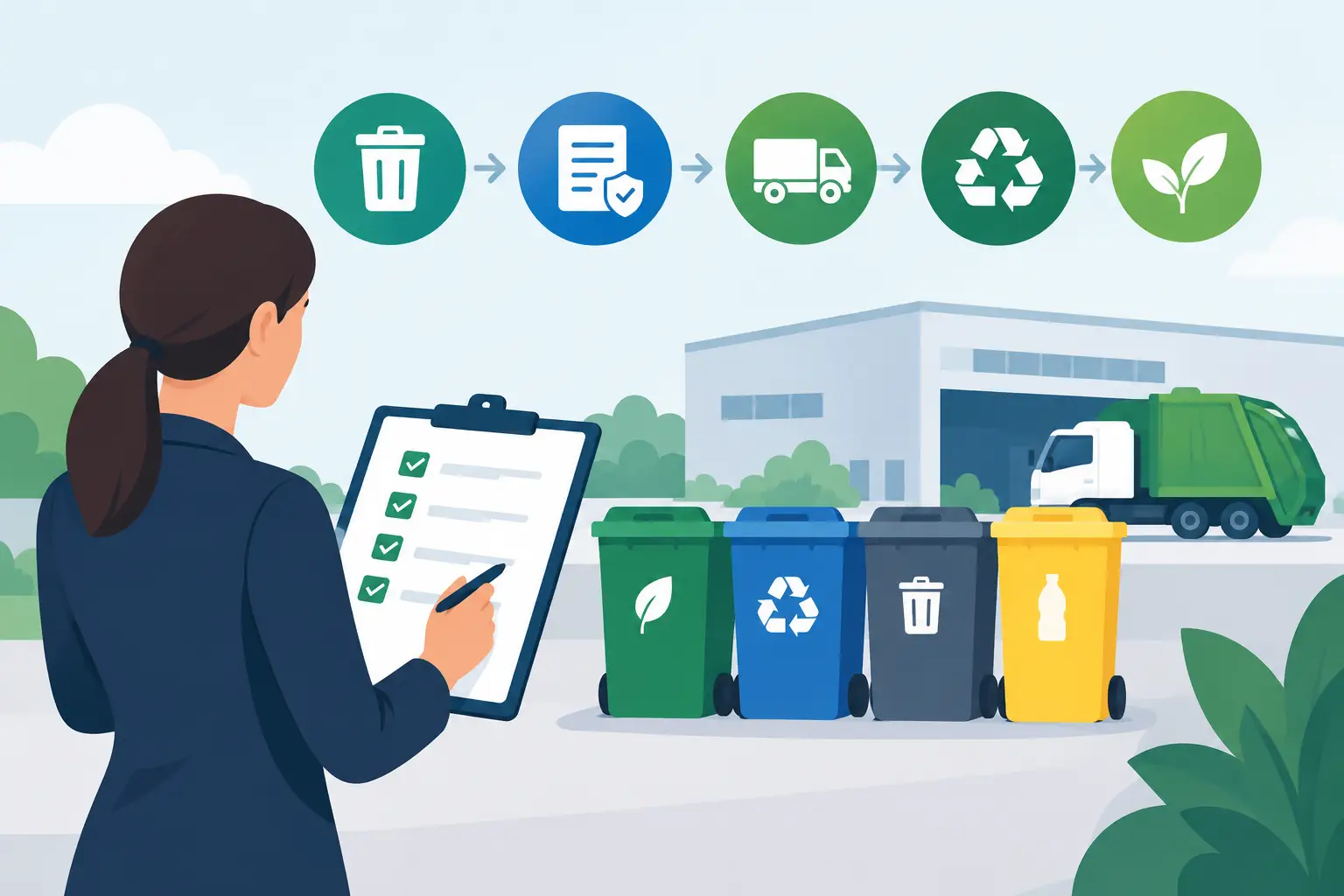
A waste load can become a compliance problem before it has even crossed the weighbridge. When operators create waste acceptance procedures properly, they give commercial teams, drivers, weighbridge staff and site operatives a clear basis for deciding what may enter site, what needs further checks and what must be refused.
For permitted waste operations, this is not paperwork produced to satisfy an auditor. It is an operational control that supports the Environmental Permit, protects storage and treatment activities, reduces fire and pollution risks, and provides evidence that the site is being managed as described to the regulator.
Start with the permit, not a generic template
A useful procedure must reflect the specific activity authorised at the site. Begin by reviewing the permit, its schedules and supporting documents such as the Environmental Management System, Fire Prevention Plan, drainage plan and operating techniques. Identify every waste code, quantity restriction, storage area and treatment process that affects acceptance.
Generic procedures often fail because they state that the site accepts only “permitted waste” without explaining how staff will establish this in practice. The procedure should translate permit conditions into decisions that a competent member of the site team can make during a busy working day.
This includes understanding whether a waste type is accepted for transfer, treatment, recovery, storage or disposal. A code may appear on the permit, but the proposed waste could still be unsuitable because of its physical form, contamination level, packaging, moisture content or incompatibility with the intended process.
For landfill operations, Waste Acceptance Criteria may impose additional and highly specific requirements. Those requirements should be incorporated into the site procedure, but they should not be confused with the wider waste acceptance process needed at transfer stations, treatment sites and other permitted facilities.
Define the acceptance boundary clearly
The procedure should set out the site’s acceptance boundary in direct terms. It needs to identify accepted European Waste Catalogue codes, acceptable descriptions, source types, physical characteristics and any limits on hazardous properties or contamination.
It should also make clear what is prohibited. This is particularly important where waste streams commonly contain non-conforming material, such as mixed construction and demolition waste, commercial and industrial waste, soils, skips and loads from remediation projects.
A practical acceptance boundary normally addresses at least the following points:
- permitted waste codes and any code-specific restrictions;
- the source and producer information required before a booking is approved;
- unacceptable materials, including prohibited wastes and incompatible loads;
- contamination thresholds or visual indicators that require rejection or quarantine; and
- restrictions linked to treatment capacity, storage limits, fire risk or available plant.
The level of detail depends on the operation. A site receiving a small number of consistent, pre-approved waste streams can use a relatively focused process. A transfer station accepting varied loads from multiple customers needs stronger controls, clearer escalation routes and more frequent inspection.
Build checks into each stage of the load journey
Effective waste acceptance is a sequence of checks, not a single inspection at the gate. Each stage should provide enough information to make the next decision safely and compliantly.
Pre-acceptance: assess the waste before it is booked
Pre-acceptance should establish what the waste is, where it arose, who produced it and whether the site can manage it as proposed. Obtain a waste description that goes beyond the six-digit code. For recurring streams, this should include process information, photographs where appropriate, previous load history and any relevant sampling or analysis.
The person approving the booking must have sufficient competence and authority to identify concerns. Where information is incomplete, inconsistent or suggests a risk, the procedure should require escalation before the load is authorised. Commercial pressure must not result in acceptance decisions being made on assumption.
For hazardous waste, contaminated soils, fines, residues or wastes from industrial processes, a more detailed technical assessment may be needed. Sampling and laboratory analysis should be proportionate to the risk and should be reviewed against the permit and the destination process.
Arrival: verify documents, vehicle and load
At arrival, weighbridge or gatehouse staff should check that the carrier, vehicle, customer reference, waste description and waste code match the authorised booking. The procedure should specify the documents and records required, which may include waste transfer notes, consignment notes, carrier registration details and pre-acceptance information.
The load then requires a visual inspection. This may take place at the gate, in a designated inspection area or after tipping, depending on the site layout and waste type. The procedure should state where inspections occur, who carries them out and what staff must look for.
Inspection criteria should be specific. Rather than directing staff to inspect for contamination, explain the likely contaminants and warning signs for each material stream. For example, a load booked as clean mixed aggregates may need to be checked for asbestos-containing materials, wood, plastics, gypsum, oils, odours, drums, bonded materials or visible soil contamination.
Tipping and processing: retain control after entry
Acceptance does not end when the vehicle passes the gate. Loads can conceal unsuitable material, and a full inspection may only be possible after tipping. The procedure should require operatives to monitor the load at the tipping point and stop activity if unexpected material is identified.
Define how the site will segregate suspect material, prevent it entering stockpiles or treatment plant, and decide whether it can be reclassified, transferred to an authorised facility or returned to the producer. This needs to work alongside quarantine arrangements, fire prevention controls and emergency procedures.
Give staff clear authority to reject loads
A procedure is only effective if employees are confident they can use it. Weighbridge operators and site operatives need express authority to stop a vehicle, hold a load for inspection or refuse entry where the information or material does not meet the site’s requirements.
Set out an escalation route for uncertain cases. This should identify who makes the final decision, how that decision is recorded and when specialist advice is required. It is sensible to distinguish between minor issues that can be resolved through corrected documentation and material concerns that require rejection, quarantine or notification to management.
Rejected-load arrangements should cover the practicalities. Drivers need to know where to wait safely, whether the vehicle can leave immediately, and what paperwork or communication will be provided. The site must avoid creating an unauthorised storage situation while a disputed load remains on the premises.
Record decisions so they can be evidenced
Regulators will expect an operator to demonstrate that its procedure is being followed, not simply show that one exists. Maintain records of pre-acceptance assessments, bookings, transfer documentation, inspection findings, photographs where useful, rejected loads, non-conformances and corrective actions.
Records should make it possible to trace a load from producer to its location or treatment route on site. They should also help management identify recurring problems, such as a customer repeatedly presenting contaminated waste or a particular waste stream causing operational disruption.
The procedure should state retention periods, record locations and responsibilities for review. Digital systems can improve consistency, but a system is only as reliable as the information entered by trained staff. Paper-based arrangements can still be effective where the site has clear controls, legible records and proper oversight.
Train for real site decisions
Training should use the actual waste streams, likely contaminants and operating constraints encountered at the site. Staff need to understand why a load is being checked, not merely follow a checklist. This is particularly relevant for employees who interact with drivers, book loads, operate plant or manage tipping areas.
Refresher training should follow changes to permits, waste codes, suppliers, treatment processes or recurring non-conformances. Briefings after incidents and near misses are equally valuable, especially where they reveal that the written procedure was unclear or impractical.
EWS Consultancy Services supports operators with implementation-ready procedures, Environmental Management Systems and training that reflect permit conditions and site realities. The aim is not to create unnecessary administration, but to give teams a defensible and workable control system.
Review the procedure when the operation changes
Waste acceptance procedures should be reviewed routinely and whenever there is a material change. Examples include a permit variation, a new waste stream, revised storage arrangements, new treatment plant, a fire incident, an enforcement finding or repeated rejected loads.
Ask a simple operational question during each review: can the person receiving a load make the right decision with the information and authority available to them? If the answer is no, the procedure needs more than a document update. It may require revised booking controls, clearer signage, staff training or changes to the physical inspection area.
A well-written procedure protects the site at the point where compliance risk begins: the decision to accept a load. When that decision is informed, recorded and consistently applied, operators are better placed to maintain permit compliance while keeping the operation moving safely.