
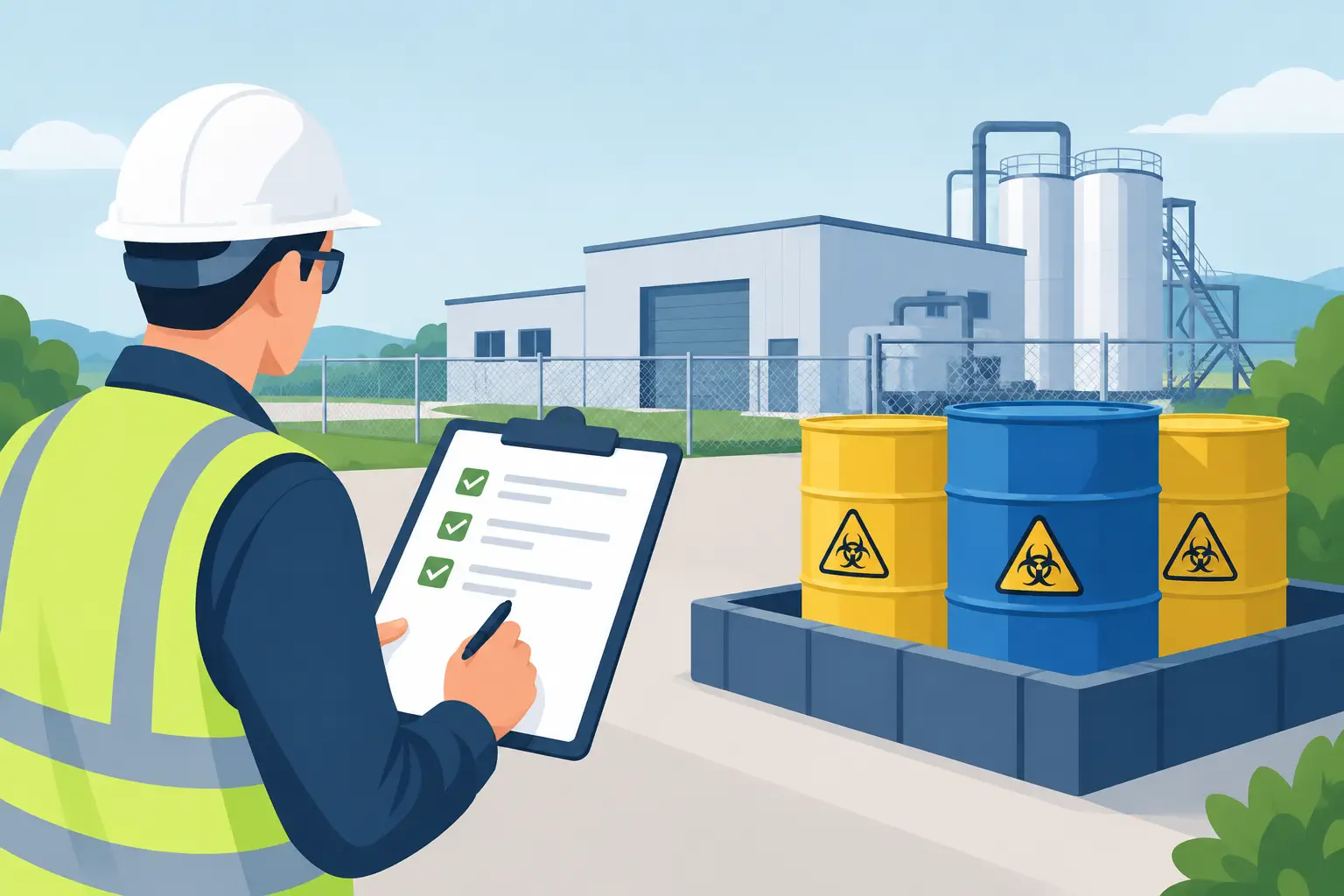
A waste operation can be commercially ready long before it is legally ready to accept its first load. Hazardous waste permits are often discussed as though they are a single approval, but the correct permission depends on the waste, the activity, the site and the potential environmental risk. Getting that scope wrong at the outset can delay an application, restrict operations or create a compliance issue once the site is live.
For operators handling hazardous waste, the starting point is not simply whether a waste is marked as hazardous. It is whether the proposed activity requires an environmental permit, what waste codes and quantities are involved, and whether the site can meet the relevant operating conditions. A clear, evidence-led application gives the regulator confidence that the risks have been identified and can be controlled in practice.
When hazardous waste permits are required
In England, regulated waste operations are generally permitted by the Environment Agency under the Environmental Permitting Regulations. The exact position will differ elsewhere in Great Britain, where the relevant regulator may be Natural Resources Wales or the Scottish Environment Protection Agency. Operators should therefore avoid assuming that an approval, exemption or operating model used at another site will automatically apply.
A permit may be needed to store, treat, transfer, recover or dispose of hazardous waste. The activity itself matters as much as the material. For example, a site receiving hazardous wastes for sorting and onward transfer presents different risks from a facility treating contaminated soils, processing oil-bearing wastes or operating a landfill cell.
The waste classification must also be sound. European Waste Catalogue codes, hazardous properties, physical form, contamination levels and compatibility with other materials all influence the permit strategy. Misclassifying a waste can lead to an application that does not reflect the intended operation. It can also create problems with acceptance procedures, consignment documentation, storage arrangements and downstream recovery or disposal routes.
Hazardous waste controls do not sit separately from everyday site management. Permit conditions are closely connected to how materials arrive, where they are stored, how long they remain on site, what happens in an emergency and how staff make decisions at the weighbridge or reception area.
Standard rules or a bespoke permit?
Many operators first need to establish whether their activity fits within a Standard Rules Permit or requires a bespoke environmental permit. This is a fundamental decision, not an administrative detail.
A Standard Rules Permit can be an efficient route where an operation falls squarely within a published rules set. The waste types, treatment activities, storage limits and site circumstances must all meet the stated criteria. The benefit is greater certainty around the application framework and, in suitable cases, a more straightforward route to permission.
However, standard rules are not flexible. If the proposed site sits too close to a sensitive receptor, needs to accept waste outside the permitted list, exceeds a storage threshold or involves a different process, the rules may not apply. Trying to force an unsuitable operation into a standard rules framework can create restrictions that are impractical from the first day of operation.
A bespoke permit is normally required where the activity, scale or environmental setting needs site-specific assessment. This can include complex treatment processes, higher-risk hazardous waste streams, non-standard storage arrangements or sensitive locations. A bespoke application takes more preparation because it must demonstrate how emissions, drainage, fire, noise, odour, dust and other risks will be managed at that particular site.
Neither route is inherently better. The right choice depends on what the business genuinely needs to do, both now and over the expected life of the permit. A permit that is quick to obtain but too narrow for planned waste streams or throughput can become an operational constraint. Equally, applying for unnecessary scope can add cost, evidence requirements and regulatory scrutiny.
Build the application around the real operation
The strongest permit applications reflect the operating reality of the site. Generic documents copied from another facility are often easy for a regulator to identify, particularly where the stated controls do not match the layout, equipment, staffing or proposed waste acceptance process.
Before submitting an application, operators should define the activity in practical terms. This includes the waste codes proposed, annual and maximum storage quantities, treatment methods, stockpile locations, drainage arrangements, plant used, dispatch routes and hours of operation. Site plans should show how the operation will function rather than simply meeting a drawing requirement.
The regulator will also expect a clear explanation of environmental risk. For hazardous waste operations, this commonly includes risks from spills, contaminated firewater, incompatible materials, fugitive emissions, surface water pollution and unauthorised waste acceptance. The level of assessment should be proportionate to the activity, but it must be specific enough to show that the controls will work.
For instance, stating that waste will be stored securely is not usually sufficient. An application should establish whether containers are sealed, how they are inspected, whether storage is within a building or on impermeable hardstanding, how leaks are contained, and what arrangements prevent incompatible wastes being stored together. Where liquid or potentially polluting waste is involved, drainage and secondary containment need particular attention.
Supporting documents are operating documents
Permit applications commonly rely on several supporting documents. These should not be treated as paperwork produced only to secure approval. Once the permit is issued, they become the basis for day-to-day compliance and may be reviewed during an inspection.
An environmental management system sets out how the operator controls and monitors environmental risks, assigns responsibilities and responds to non-conformances. A waste acceptance procedure should make clear what information is checked before waste is accepted, who can make that decision, when loads must be rejected and how records are retained.
A Fire Prevention Plan is particularly important where combustible waste is stored or treated. The plan should be based on actual materials, stack sizes, separation distances, quarantine arrangements, firewater containment and access for emergency services. A plan that cannot be implemented on the available footprint offers little protection to the operator or the surrounding environment.
Other documents may be needed depending on the site and activity, including drainage plans, accident management procedures, emissions assessments, closure plans and site condition reports. The important point is consistency. Waste quantities in the application, layout plan, fire plan and operating procedures must align. Contradictions can prompt regulator queries and create uncertainty for site staff.
Prepare for operation, not just permit issue
Receiving a permit is not the end of the process. Conditions must be understood, embedded and evidenced throughout the operation. A business can hold the correct permit and still face enforcement action if it accepts unpermitted waste, exceeds storage limits, fails to maintain required records or operates outside approved controls.
Training is central to this. Staff need more than a copy of the permit in an office folder. They should understand the waste acceptance checks relevant to their role, escalation procedures, storage rules, inspection requirements and what to do when a load does not match the accompanying information. Site managers need oversight of the operational limits that can be breached gradually, such as total stock volumes or waste storage times.
Routine internal checks help identify issues before they become regulatory concerns. These may cover incoming waste records, container condition, stockpile dimensions, drainage inspections, quarantine areas, permit reporting and actions from previous inspections. The records should demonstrate that checks are completed, findings are addressed and responsibility is clear.
Operators should also plan for change. A new waste stream, additional treatment plant, revised site layout or increased throughput may require a permit variation before the change is made. Assessing the permitting implications early is far less disruptive than explaining an unauthorised change after an inspection.
A practical route to compliant hazardous waste operations
The most effective hazardous waste permit strategy starts with an honest appraisal of the intended operation and the site’s environmental constraints. It then translates that information into a permit application, management system and staff procedures that work together.
EWS Consultancy Services supports operators with Standard Rules and bespoke permit applications, alongside the practical documentation and training needed to implement controls on site. The value of specialist support is not simply in completing forms. It is in ensuring that the permission sought is workable, the evidence is credible and the operating team can maintain compliance after approval.
A permit should support safe, lawful and commercially viable operations. When the scope, documents and site controls are aligned from the beginning, operators are better placed to manage regulator expectations and keep the business moving.